Unlock the Potential of Inline Intelligence
Build and produce tissue models, develop bioinks, and study human biology with insight into every print.
Use Cases
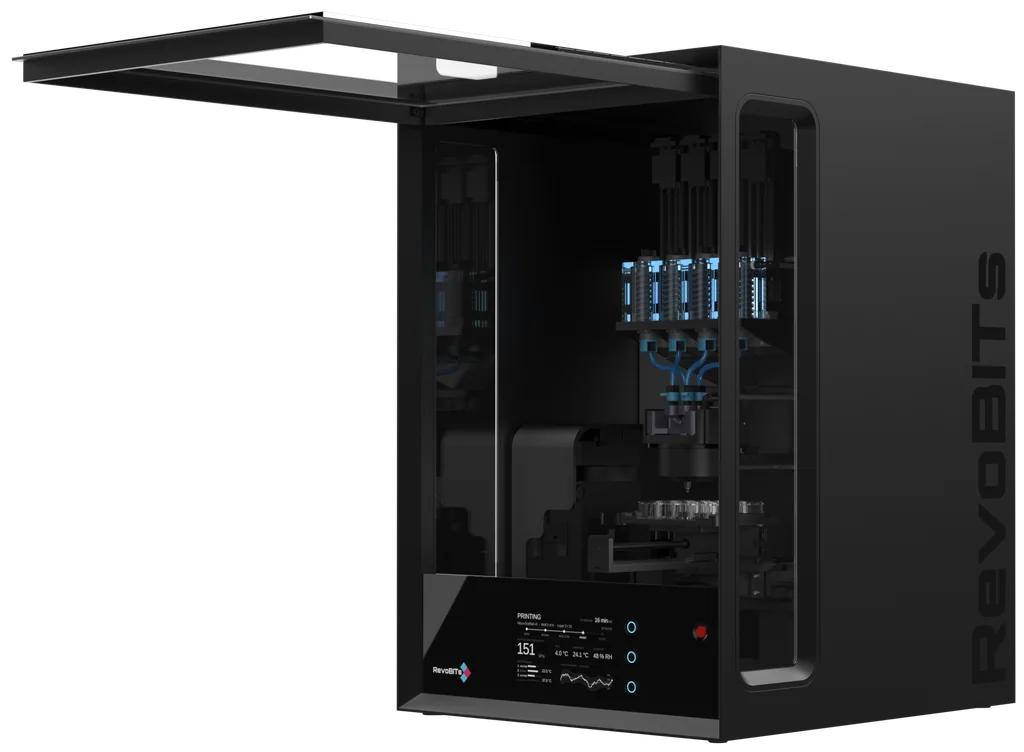
First customers & collaborators confirm the added value of the RevoBITs byte 1 bioprinter in their field of application.
3D Neural Models
Project: Animal free 3D printed artificial synapses for studying human neurological disordersPD Dr. Natascha Schäfer (UKW) and Professor Robert Harvey (UniSC, Australia) are developing 3D models of artificial synapses using human induced pluripotent stem cells (iPSCs). Supported by the Bavaria–Queensland Research Alliance, the project combines RevoBITs bioprinting technology with human cell culture solutions from PELOBiotech. The aim is to recreate neuronal connections in three dimensions without animal tissue, helping researchers understand how disrupted cell communication contributes to childhood neurological disorders, including epilepsy. These human-based models could lay the groundwork for future personalized therapies.
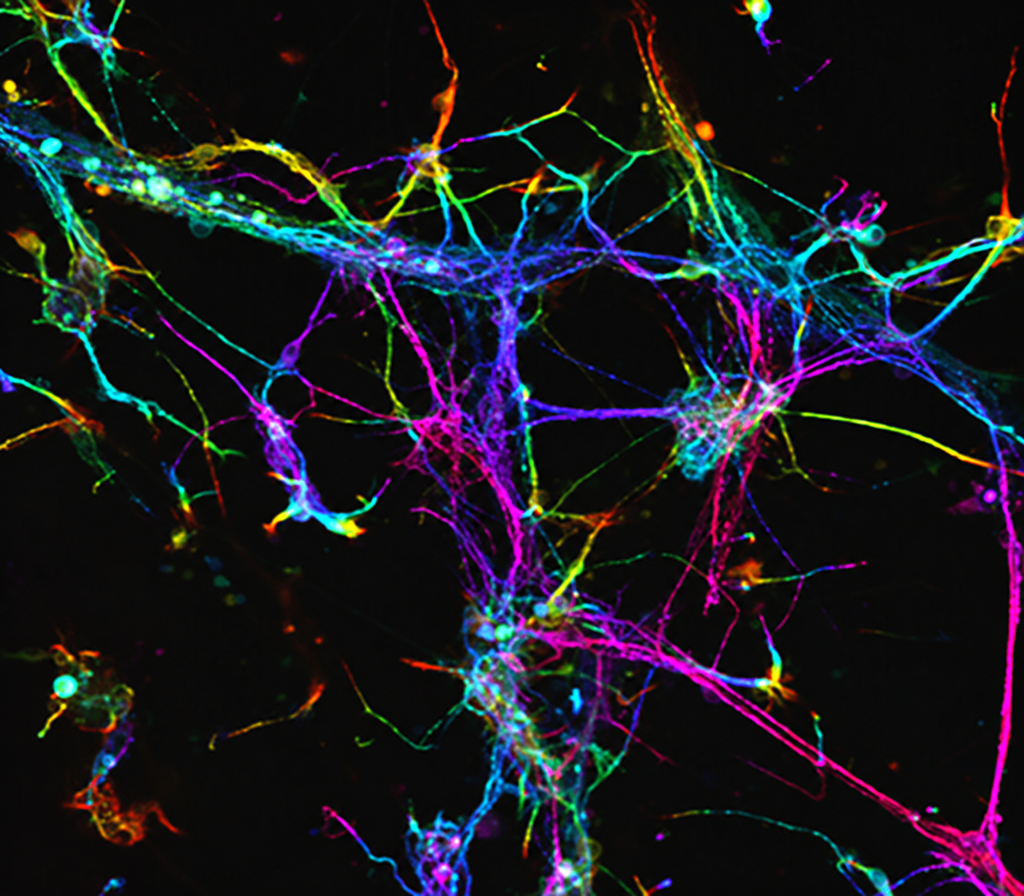
Image credit: Murenu et al. (2026) · Fig. 2a
A 3D culture of mouse spinal cord neurons with astrocytes and laminins (SCN-AC-LN) at day 14. Colors indicate depth, from red near the surface to pink deeper in the sample.
N. Murenu, E. Tuerker, A.-L. Wiessler, et al. Purpose-Adaptable Reinforced 3D Hyaluronic-Acid Based Platform to Study Pathomechanisms of the Central Nervous System. Advanced Healthcare Materials 15, no. 17 (2026): e05946.
Adapted from Figure 2a: white border cropped and AI-upscaled to 1024 pixels wide. © 2026 The Author(s). CC BY 4.0
RevoBITs provides the solutions we need, enabling the precise 3D printing of nerve tissue models using intelligently mixed bioinks.
PD. Dr. rer. nat. Natascha Schäfer
University Hospital Würzburg

Tumor Microenvironments
Project B09: Biofabricated gradients to study melanoma tumor progression in defined microenvironmentsAt the Laboratory for Tissue Engineering and Regenerative Medicine, Rafael Schmid and his colleagues develop 3D breast cancer and melanoma models to study the tumor microenvironment. Their bioink research examines how different matrices affect tumor cell survival and behavior. Within CRC/TRR 225, Schmid co-leads project B09 with Silvia Budday (FAU) and Tomasz Jüngst (Würzburg). The project focuses on melanoma, developing reproducible gradients and controlled transitions between materials, cells, and active compounds to study cell–biomaterial interactions under defined conditions. These complex models call for precise control over both material composition and processing temperature. RevoBITs’ multimaterial printhead and continuous thermal regulation support the combination of temperature-sensitive bioinks, helping the team recreate distinct tissue environments within a single construct.
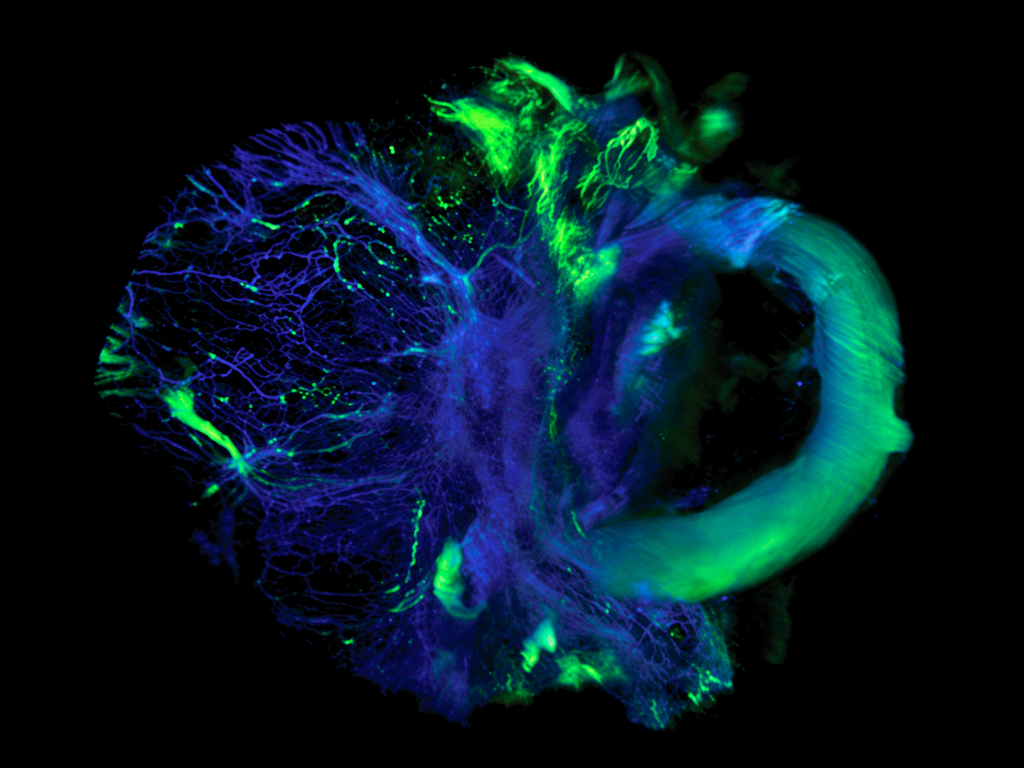
Image credit: Schmid et al. (2022) · Fig. 5b
Melanoma vascularization: 3D reconstruction with CD31 staining (blue) and autofluorescence (green).
Schmid et al. A New Printable Alginate/Hyaluronic Acid/Gelatin Hydrogel Suitable for Biofabrication of In Vitro and In Vivo Metastatic Melanoma Models. Adv. Funct. Mater. 2022, 32, 2107993.
Adapted from Figure 5b: cropped and AI-upscaled; labels and scale bar removed. © 2021 The Authors.
Our breast cancer and melanoma research relies on recreating the tumor microenvironment, printing multiple materials at precisely controlled temperatures. With the RevoBITs multimaterial printhead and continuous thermal regulation, we can model the microenvironment in far greater detail than other systems allow, and significantly accelerate our work.
PD. Dr. rer. nat. Rafael Schmid
University Hospital Erlangen

Precision Gradient Bioprinting
Project B09: Biofabricated gradients to study melanoma tumor progression in defined microenvironmentsTomasz Jüngst’s research at the Institute of Functional Materials and Biofabrication focuses on the printing process itself. His group develops mixing printheads for defined material gradients with high cell viability and compares extrusion technologies for precise, reliable deposition. Recent studies examine tunable 3D-printed static mixers and benchmark progressive cavity pumps against pneumatic and syringe-driven systems. Within CRC/TRR 225 project B09, Jüngst works with Silvia Budday (FAU) and Rafael Schmid (University Hospital Erlangen) to make reproducible gradients a tool for studying cell–biomaterial interactions. Jüngst’s group develops and evaluates the printing technology, complementing Rafael Schmid’s tumor-model research at University Hospital Erlangen, which investigates the biological environment. RevoBITs supports this work through precise process control and multi-material printing within a single build.
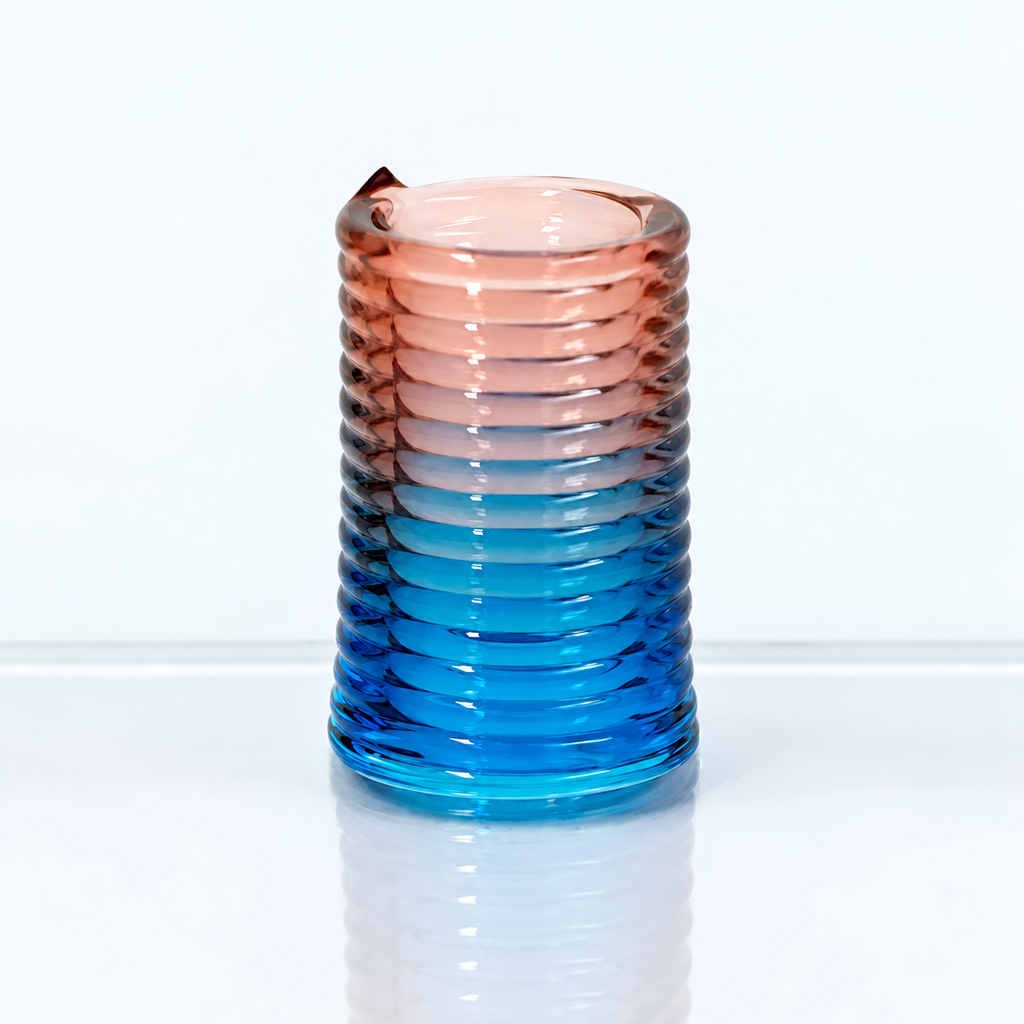
Image credit: Moser et al. (2026) · Fig. 1b
Gradient printing: a layered cylindrical construct with a continuous color transition.
F. Moser, S. Rahmani, and T. Jungst. Progressive Cavity Pumps—A Comparison of New Technology for Gradient Bioprinting to Existing Extrusion Methods. Engineering in Life Sciences 26, no. 2 (2026): e70070.
Adapted from Figure 1b: cropped and AI-upscaled; background extended with AI. © 2026 The Author(s). CC BY 4.0
RevoBITs technology will change bioprinting! Precise process control combined with multi-material printing create the foundation for more realistic tissue models and will accelerate the path to new therapies.
Jun.-Prof. Dr. Tomasz Jüngst
University of Würzburg

Want to Explore Your Use Case?
Tell us what you’re working on, from tissue models to new bioinks. Let’s explore how byte 1 could advance your research and how RevoBITs can support your work.
An early idea or a specific challenge — we’d love to hear from you.