







Recognized & Supported By
From Our Pilot Partners
"12 labs. Same protocol.
12 different results."
A 2023 round-robin study tested the same extrusion bioprinting protocol across 12 German academic labs. Not one site could reproduce the results. Operator variability and bioink batch differences play a role. But the root cause is hardware that can't detect or compensate for these variations. (PubMed 37769669)
Three systemic problems are costing your lab months of work and progress.
And no current device addresses them.
To understand the bioink one must rely on external measurement devices, then hope that results are transferable to the printer. Temperature-sensitive bioinks are especially intricate.
No system on the market enables characterization in the printing process.
Conventional systems can only alternate between materials: hard transitions, no gradients. Each material needs its own pre-filled cartridge, wasting expensive bioinks and multiplying preparation errors before you even start printing.
No biological or mechanical gradients possible, only discrete material switches.
You set parameters and hope. As bioink viscosity shifts mid-print, there's no closed-loop system to detect it, until you discover 14 days of culture later that the experiment failed.
Untracked differences in mechanical stresses turn well-plate data into random datasets.
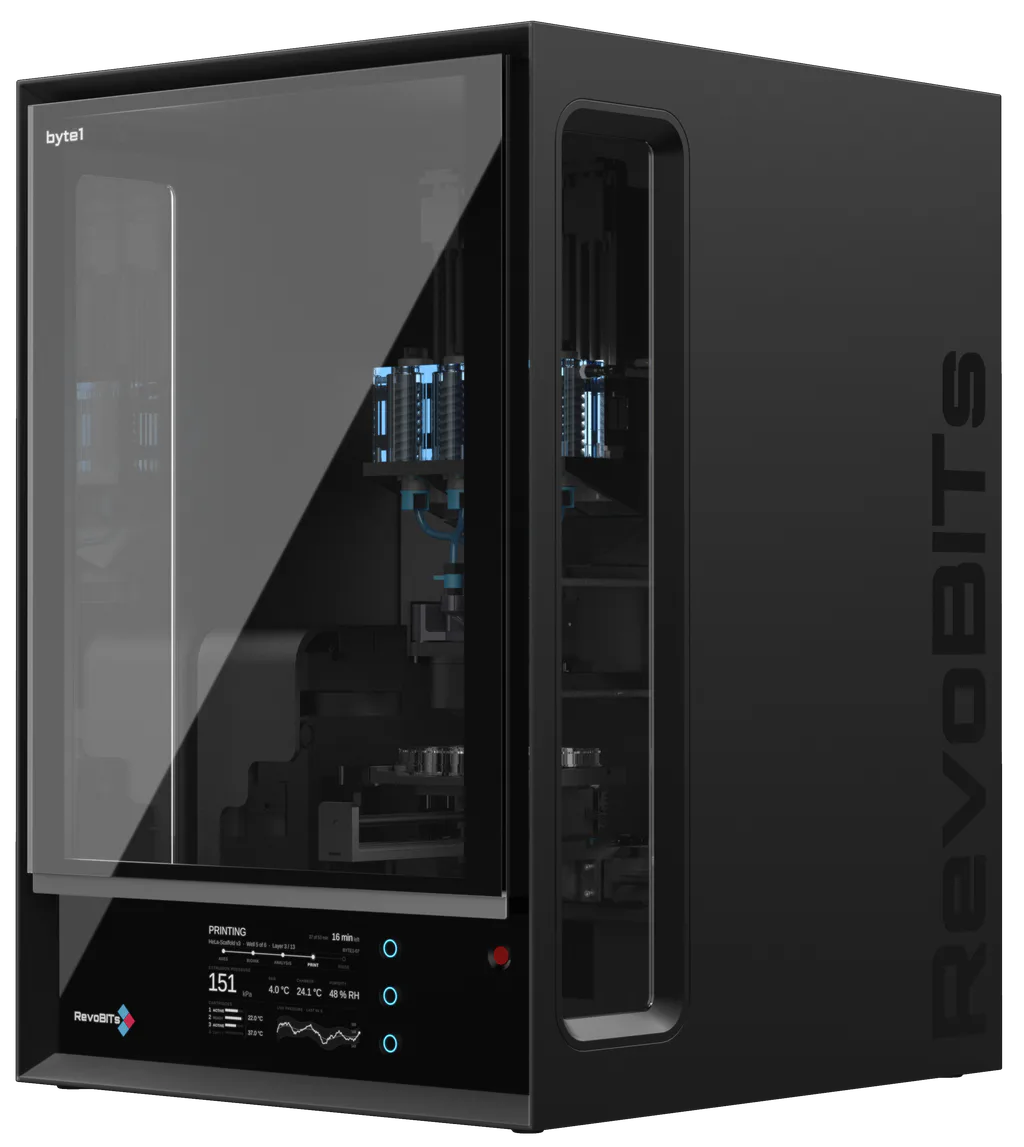
Byte 1 combines four integrated solutions to make reproducibility the default. Not the exception.
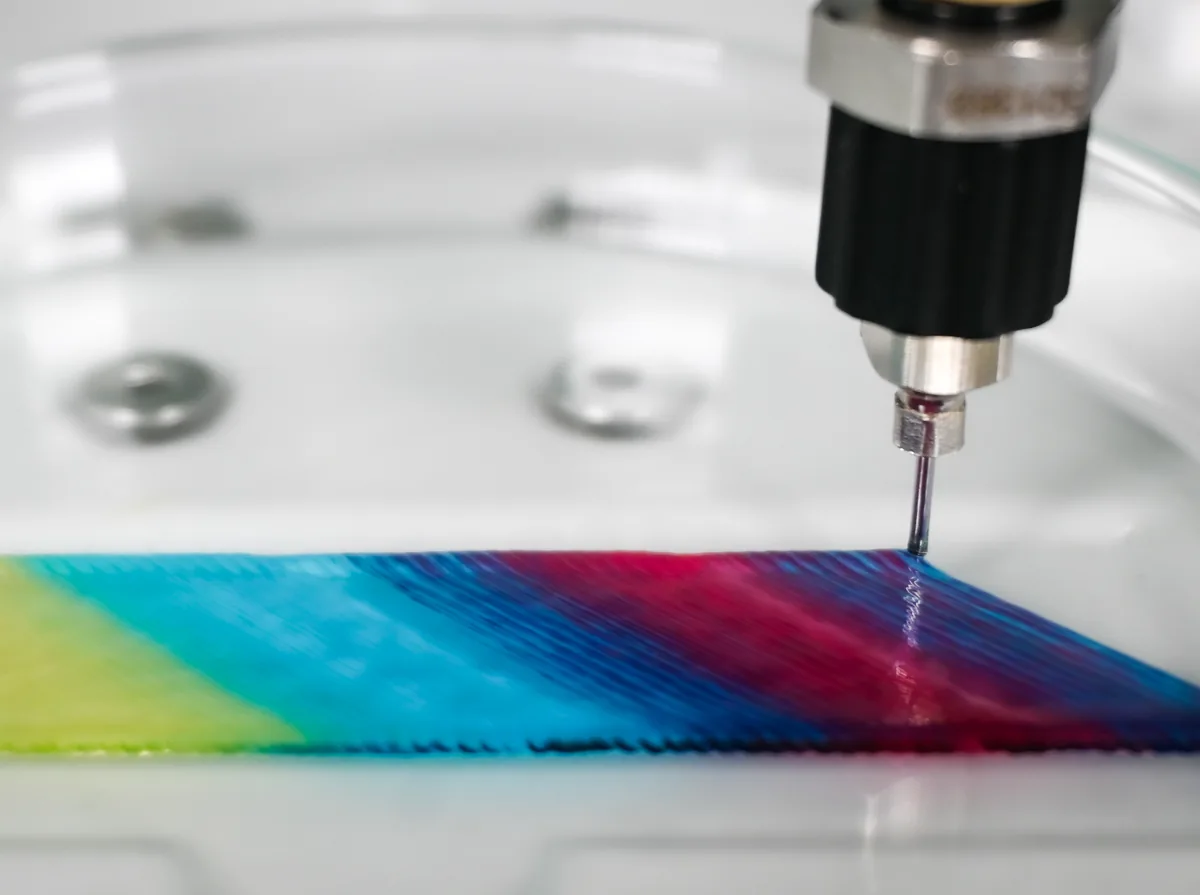
Print over 100+ material combinations, vs. 6 with competitors, across the full viscosity range from 100 mPas to 5 kPas. Any cell type. Any bioink. In one session.
Integrated sensors characterize material properties and detect rheological shifts in real-time during printing. Know exactly what your bioink is doing before it affects your construct.
The only system on the market with seamless temperature control across the full biological range: 4°C to 50°C. Run cold collagen next to warm GelMA simultaneously.
All sensor data from the three systems above feeds a unified automation and feedback engine. Byte 1 independently handles print jobs, identifies issues, and self-corrects based on pre-characterizations. The protocol lives in the machine, not in your most experienced student's head. Set it. Print it. Trust it.
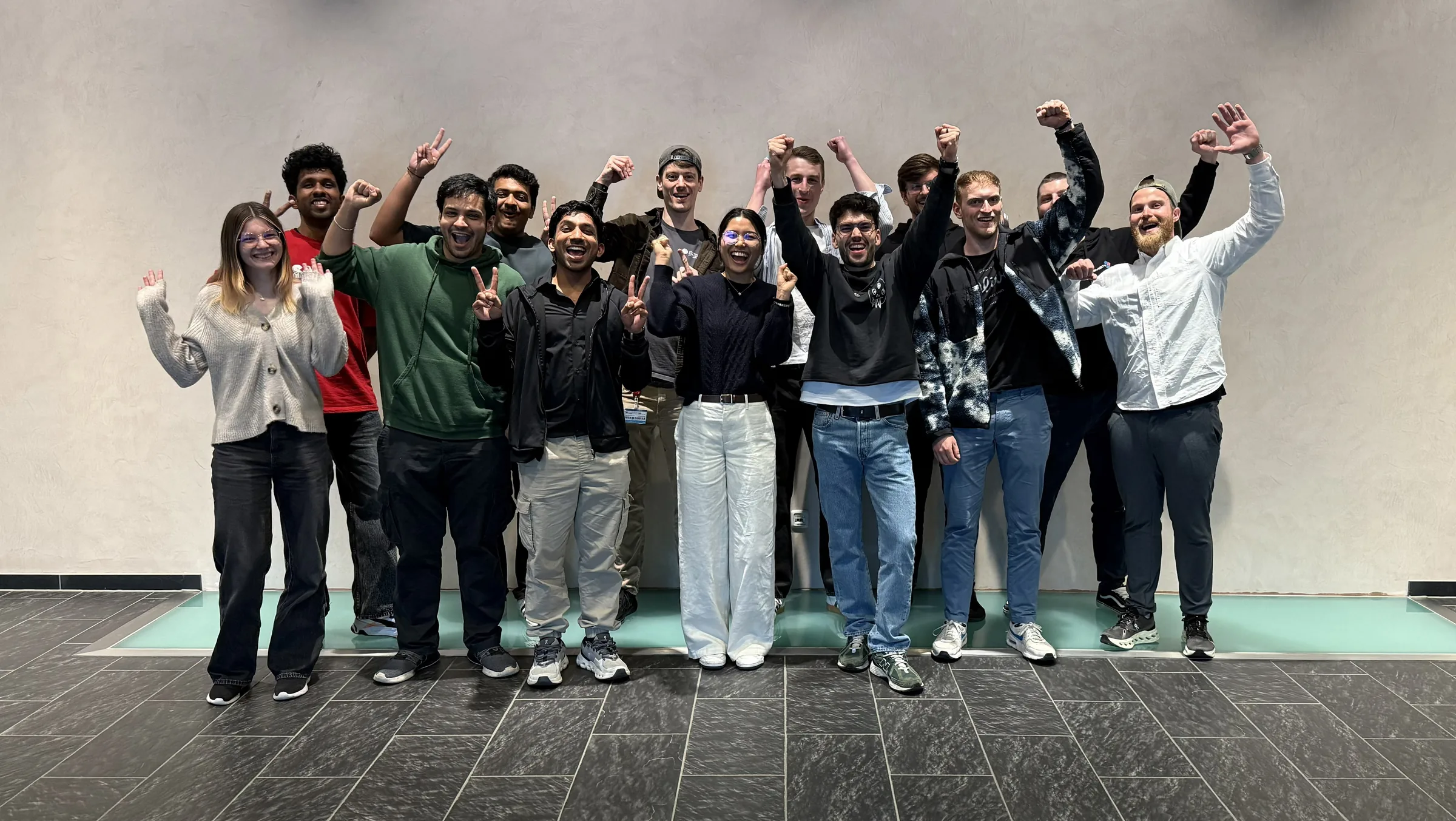
Our tech team is composed of Hardware, Software, Electronics, Material and Tissue Engineers dedicated to driving bioprinting to the next stage.
Book a 20-minute discovery call with our team. We'll show you exactly how Byte 1 eliminates the root causes of irreproducibility in your specific workflow.
The founding team is looking forward to meeting you!